

How to play
Everyone gets their own arena, their own campfire, and their own rifts pouring out monsters at night. Gather by day, build up your base, and hold the line when the sun goes down. Your deck does more than defend, though: every card that summons a monster can be pointed at somebody else instead.
The loop

Day — gather
Chop, mine, and pick up what your workers drop. Wood and stone build; coal, gold and crystal gate everything expensive. Fuel the fire before you go anywhere.

Day — build
Raise the base tier at any wall, put up towers, climb your weapon and armor ladders at the Armory. Every tier you climb raises the heat cap, which is what unlocks your bigger burn casts.

Night — hold
Rifts spill their legion. Warmth drains twice as fast in the dark and takes your health with it once it empties. Stand near fire, or don't stand at all.

Night — send
Whatever you burn-cast during the day is already in somebody else's legion. They find out when it walks out of their rift.
The clock is the opponent nobody controls. Fuel decays whether or not anything is attacking. Rifts grow stronger every night, and more of them open on days 3 and 5. Racing your own clock against everybody else's is the whole game, and a match that stalls is a match everyone is losing.
Two ways to cast every card
Mana cast — tempo
Cast from anywhere. Mana regenerates slowly, the effect resolves immediately, and the card goes to your discard to be reshuffled and drawn again. Attack cards spawn their monsters at every opponent's rift right now.
Burn cast — power
You have to be standing at your own campfire. The card costs heat tiers instead of mana, the effect is bigger, and the card is exhausted, gone for the rest of the match. Attack cards stop spawning immediately and queue into the enemy's next night legion instead: delayed, larger, and landing at the moment they can least afford it.
Only the costly Dawn Raid ritual can grow a legion with mana. Everything else has to walk to the fire and pay for it.
Read every cardHeat tiers
Fuel converts into discrete tiers rather than a smooth bar, and your cap sits one tier above your base tier.
Wood is 1 fuel, coal is 3. Adding fuel also heals the campfire, which is why feeding it is both an economy move and a repair.
Cards that build on each other
Lines of cards read each other, and a few read a resource that only exists once you have started earning it.

Souls
Some cards bank a Soul on every kill they land, and others read that count as they resolve, so "Deal 2+✦ damage" reads "Deal 2+7 damage" once you're carrying seven. They are currency. Spending them is the whole point.

Fortification
The only line that acts on your base rather than on units: towers that fire twice, walls that stand a tier above your own, burning pitch along the parapet, wards inside the gates, and a card that holds everything you own above zero for fifteen seconds.

The legion
Attack cards don't spawn a unit next to you. They arrive at somebody else's rift. Burn them and the monsters wait for nightfall instead, stacking into a wave that hits everyone at once.
Base building without the menus
No construction UI, no blueprint placement, no grid to fight. Build zones are already sitting in your arena. Walk up and hold E.
A zone stays completely invisible while it's locked. Once your base tier reaches its requirement it reveals a dim icon, and a "ready" ring appears on top of it only once you can actually afford to build it. Interacting with something already built upgrades it instead.
Walking up to any wall or gate and holding E upgrades the base itself: every wall and gate repairs and levels at once, new zones reveal, your heat cap rises, and at tier 5 a moat opens that only flying monsters can cross.
A prompt can offer up to three things at once, on E, F and G. That's what lets a building do more than one job: the Armory puts your weapon ladder on E, your armor ladder on F and its own tier on G, and the Barracks offers Muster: pay per soldier to take the next one off every training line now, instead of waiting out its clock.
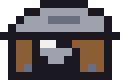
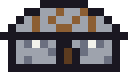
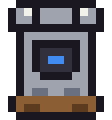
Every structure and cost8 buildable structures





Modes and lobbies
The Descent
A free, solo campaign. 50 authored Depths, each one a fixed fight cleared once and banked forever, and every floor harder than the last. Finish all 50 and the path keeps going into generated ones that never stop. More.
Ranked
Queue alone for a 1v1, or bring a friend and get matched against another duo. The two ladders are rated separately on the server, so a duo's result never touches your solo rating. Live ladder.
Arena gauntlet
A paid roguelite run: spend Sparks to enter, draft a deck out of five packs, and fight escalating themed opponents until three losses end it. Two-player co-op supported. More.
Custom
Your lobby, your rules. Free-for-all gives one to four players an arena and a campfire each; Teams puts two of you around one shared fire. Private, with the map picker unlocked, and any empty seat can be a bot.
Getting people in
Steam lobbies — create, browse and join with no IP addresses and no port forwarding. The browser only lists Demonic Defense games.
Joined players press Ready; the host's button turns into START once everyone else is. Any empty seat can be filled with a bot.
Playing with bots
Easy, Medium and Hard. Nothing cheats: no extra resources, no extra vision, no discounts. Easy and Medium genuinely make worse decisions, and nothing is slowed down to let you win.
They gather, build, raise their base tier, climb the Armory ladders, repair what you break, and point cards back at you. Hard will punish a night you weren't ready for.
Controls
| Input | Action |
|---|---|
| WASD / arrows | Move |
| E (hold) | Interact, 1st option — chop trees, mine rocks, feed the campfire, build, upgrade |
| F (hold) | Interact, 2nd option — whatever the prompt lists on its second row |
| G (hold) | Interact, 3rd option — the third row |
| Shift (hold) | Raise your hand of cards; click one to play it |
| Ctrl (hold) | Standing at your own fire, cast with mana instead of burning the card |
| 1 – 4 | Play the card in that hand slot directly |
| Space | Manual attack (weapons auto-fire by default) |
| M | Arena map overlay — spy on what your opponents are doing |
| Tab (hold) | Player intel: base tier, fire, buildings, upgrade level and total legion strength, one row each |
| F1 – F4 | Hold to watch that player's arena live |
| Esc | Pause |
Every key is rebindable from Settings → Controls, and the mapping is saved to your profile alongside audio and graphics settings.